
Nashville, Murfreesboro, Knoxville and Chattanooga TN
Few pest problems create panic quite like hearing the words bed bugs.
The good news? Finding bed bugs does not mean your home is dirty.
Bed bugs can show up in homes, apartments, hotels, dorm rooms, and other places where people sleep, regardless of how clean the space may be.
The important thing is knowing what to look for and taking action early.
For homeowners throughout Nashville, Murfreesboro, Knoxville, Chattanooga, and surrounding Tennessee communities, recognizing the signs of bed bugs can help you address an infestation before it becomes more difficult to manage.
What Are Bed Bugs?
Bed bugs are small, flat, reddish-brown insects that feed on the blood of people and animals.
They are most active at night, which is why they are commonly found near beds and other sleeping areas.
Adult bed bugs are relatively small and can easily hide inside narrow cracks, seams, furniture joints, and other protected spaces during the day.
Because of their size and hiding behavior, an infestation can sometimes develop before homeowners realize what is happening.
What Are the Signs of Bed Bugs?
Bed bug bites are often the first thing people notice.
However, bites alone are not enough to confirm an infestation because reactions vary from person to person and can resemble bites from mosquitoes, fleas, and other insects.
Instead, look for multiple signs.
Potential signs of bed bugs include:
- Live bed bugs
- Small reddish-brown insects around mattresses or furniture
- Shed skins or exoskeletons
- Small rusty or reddish stains on bedding
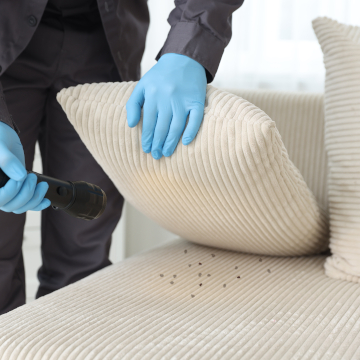
- Dark spotting around mattress seams or furniture
- Eggs or eggshells
- A noticeable musty odor in heavier infestations
- Unexplained bites after sleeping
If you suspect bed bugs, inspect the sleeping area carefully rather than relying only on bite marks.
Where Do Bed Bugs Hide?
Despite the name, bed bugs don’t only live in mattresses.
They tend to stay close to areas where people sleep or spend long periods of time, but they can hide almost anywhere that provides a narrow, protected space.
Common hiding places include:
- Mattress seams
- Box springs
- Bed frames
- Headboards
- Nightstands
- Dressers
- Upholstered furniture
- Baseboards
- Cracks and crevices
- Behind wall hangings
- Beneath loose wallpaper
- Along carpeting
- Clothing and stored belongings
Ameri Care Services technicians have also found bed bugs in less obvious places during inspections, including electrical outlets, wall-mounted mirrors or picture frames, clocks, televisions, and smoke detectors.
That ability to hide is one of the biggest reasons bed bugs can be so difficult to eliminate without professional help.
How Do Bed Bugs Get Into Your Home?
Bed bugs are excellent hitchhikers.
They don’t usually enter your home from the yard like ants or spiders.
Instead, they can be transported from one location to another inside:
- Luggage
- Overnight bags
- Clothing
- Bedding
- Furniture
- Backpacks
- Personal belongings
Travel is one of the most common ways people accidentally bring bed bugs home.
Used furniture can also create a risk if it comes from an infested location.
Once bed bugs enter a home, they can move into cracks and protected spaces near sleeping areas and begin reproducing.
Are Bed Bugs a Sign of a Dirty Home?
No.
This is one of the biggest misconceptions about bed bugs.
Bed bugs are not attracted to dirt or poor housekeeping.
They are looking for a host and a protected place to hide.
Bed bugs have been found everywhere from apartments and dorm rooms to high-end hotels and resorts.
A clean home can get bed bugs just as easily as any other property.
Clutter can make an infestation harder to treat because it creates additional hiding places, but cleanliness itself does not determine whether bed bugs appear.
Are Bed Bug Bites Dangerous?
Bed bugs are not known to spread diseases to people.
However, their bites can still be extremely frustrating.
Some people experience little or no reaction, while others may develop:
- Red or swollen bite marks
- Itching
- Skin irritation
- Difficulty sleeping
- Allergic reactions in rare cases
Excessive scratching can also sometimes lead to secondary skin infections.
Anyone experiencing a severe or unusual reaction should speak with a healthcare provider.
Why Bed Bugs Can Be Difficult to Eliminate
Bed bug infestations can be challenging because these pests are incredibly good at hiding.
They can fit into very small spaces, remain hidden during the day, and spread throughout a room or property.
Simply spraying the bed or throwing away a mattress may not eliminate the infestation.
Bed bugs may still be hiding in:
- Furniture
- Baseboards
- Wall voids
- Flooring
- Nearby rooms
- Stored belongings
That is why identifying the full extent of an infestation is so important.
Should You Try DIY Bed Bug Treatment?
It’s understandable that homeowners want to solve a bed bug problem immediately.
However, DIY bed bug treatments can sometimes make the situation more complicated.
Treating only visible bugs may leave hidden insects and eggs behind.
Moving furniture or belongings from an infested room into another part of the house can also potentially spread the problem.
Professional bed bug treatment begins with a thorough inspection to determine where activity is occurring and how extensive the infestation may be.
From there, a pest control professional can recommend an appropriate treatment strategy.
What Does a Professional Bed Bug Inspection Look For?
A professional inspection focuses on areas where bed bugs are most likely to hide.
Depending on the property, a technician may inspect:
- Mattresses and box springs
- Bed frames and headboards
- Upholstered furniture
- Baseboards
- Carpeting
- Wall cracks
- Electrical outlets
- Closets
- Nearby furniture and belongings
Professional identification is important because several insects can be mistaken for bed bugs.
Confirming the pest before treatment helps ensure the right strategy is used.
How Can You Reduce Your Risk of Bringing Bed Bugs Home?
Bed bugs can happen to anyone, but a few habits can help reduce your risk.
- Inspect Hotel Rooms – When traveling, check the mattress seams, headboard, and surrounding furniture for signs of bed bug activity before unpacking.
- Keep Luggage Off the Bed- Avoid placing suitcases directly on beds or upholstered furniture. Use a luggage rack when available.
- Check Your Luggage After Traveling – Inspect luggage before putting it away and pay attention to seams, pockets, and folds.
- Be Careful With Used Furniture – Inspect secondhand mattresses, couches, chairs, and other upholstered furniture carefully before bringing them into your home.
- Know the Warning Signs – Early detection can make bed bug infestations easier to address. If something looks suspicious, don’t ignore it.
Don’t Wait for a Bed Bug Problem to Get Worse
Bed bugs rarely disappear on their own.
Because they’re so good at hiding, waiting can give an infestation more time to spread.
If you’re repeatedly waking up with unexplained bites, noticing unusual stains around your bedding, or finding insects near your mattress or furniture, a professional inspection can help determine what you’re dealing with.
At Ameri Care Services Pest Control, our team provides professional bed bug inspections and treatment options to help homeowners identify and address bed bug activity.
Schedule a Bed Bug Inspection in Tennessee
Ameri Care Services Pest Control serves homeowners throughout Nashville, Murfreesboro, Knoxville, Chattanooga, and surrounding Tennessee communities.
If you think you might have bed bugs, don’t rely on guesswork or wait for the problem to spread.
Call Ameri Care Services Pest Control at (615) 893-7111 today to schedule a professional bed bug inspection and learn more about treatment options.