

 Nashville, Murfreesboro, Knoxville and Chattanooga TN
Ladybugs have long been associated with good luck and charming superstitions. For example, it’s said that if a ladybug lands on you and then flies away on its own, you’ll have good luck. Counting the spots on a ladybug is believed to reveal how many years of good luck you’ll enjoy. Another common belief is that a ladybug in a crop field signals a bountiful harvest. And interestingly, the brighter the red color of the ladybug, the stronger the luck!
But while many people know and love the traditional ladybug, there’s another lookalike insect that can be a nuisance — the Asian lady beetle. It’s important to know the differences, especially if you live in Nashville, Murfreesboro, Knoxville, or Chattanooga, where these beetles can become seasonal pests.
What’s the Difference Between Ladybugs and Asian Lady Beetles?
Most people picture ladybugs as small, round, bright red insects with black spots—and for good reason. Ladybugs are beneficial insects that don’t bite and are great for natural pest control in gardens.
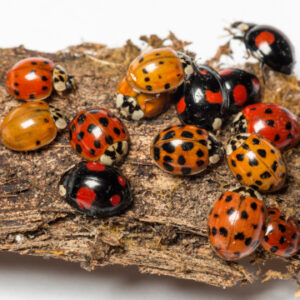
However, Asian lady beetles, which were introduced to North America to help control crop pests, behave differently. While they can help manage agricultural pests, they often become problematic when they invade homes and businesses in large numbers.
Unlike native ladybugs, Asian lady beetles:
- Can be various colors, including yellow, orange, brown, or red.
- Tend to gather in large groups, especially in the fall.
- Can bite humans, which can be unpleasant.
How to Identify Asian Lady Beetles
If you spot a red beetle, it might be a native ladybug or an Asian lady beetle.
To tell the difference, take a closer look at the insect’s “shoulder” area, called the thorax, just behind the head:
- Asian lady beetles have a distinct black “M” or “W” shaped marking on their white or cream-colored thorax.
- Native ladybugs have mostly black thoraxes with two small white spots on each side.
Knowing this can help you distinguish between the harmless, beneficial ladybugs and the more aggressive Asian lady beetles that tend to invade homes.
Why Are Asian Lady Beetles a Problem in Fall?
Asian lady beetles are notorious for invading homes in the fall as they seek warm places to overwinter. Their numbers can be especially high in areas near crop fields, where they gather by the thousands.
Unlike native ladybugs, which do not usually cluster indoors, Asian lady beetles can:
- Bite if disturbed
- Stain fabrics and surfaces with their bodily fluids
- Emit a foul odor when crushed or threatened
- Trigger allergic reactions in sensitive individuals
- Return year after year if infestations are not managed
How to Prevent Asian Lady Beetle Infestations
If you want to keep Asian lady beetles out of your home in Nashville, Murfreesboro, Knoxville, or Chattanooga, try these preventive steps:
- Ensure all window and door screens are intact, without holes or tears
- Seal any gaps around window and door frames with caulking
- Check that weatherstripping and door sweeps are in good condition and replace them if needed
- Keep outdoor lighting to a minimum or use yellow bulbs, which are less attractive to insects
What to Do If Asian Lady Beetles Invade Your Home
If Asian lady beetles have already made their way inside, you can try to remove them by vacuuming them up or placing sticky traps near entry points. However, because these beetles tend to return and can be difficult to fully eliminate, professional pest control services can provide the most effective and lasting solution.
Protect Your Home from Asian Lady Beetles
If you live in Nashville, Murfreesboro, Knoxville, or Chattanooga and are dealing with Asian lady beetles or want to prevent them from invading your home, Ameri Care Services Pest Control is here to help. Our experienced team understands the local pest challenges and can provide comprehensive treatments to keep these unwanted beetles—and other pests—out of your home.
Contact us today to learn more about our pest control services and how we can help protect your property year-round.