
 Nashville, Murfreesboro, Knoxville and Chattanooga TN
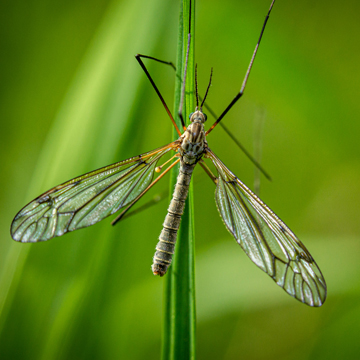
It may throw you off when you notice a giant flying insect that resembles a mosquito. Although the mosquito hawk can appear frightening because of its size compared to regular mosquitoes, it’s an insect that poses no threat to humans. The mosquito hawk is more commonly known as a crane fly and is often welcomed as they are believed to eat mosquitoes. With a narrow, long body and six long legs, they resemble a mosquito but without a biting threat. Our Nashville mosquito control professionals at Ameri Care Services share on the blog today more details about these mosquito-looking insects and their purpose.
Distinctive Features
Mosquitoes and crane flies share multiple physical attributes and may be confused with one another. However, crane fly wings can vary in color, size, and pattern. Furthermore, according to Entomology Today, crane flies are not predators and fail to possess the ability to bite humans or suck their blood. The biggest visual difference between crane flies and mosquitos is their size difference.
Crane Fly Purpose
A crane fly’s purpose is to mate, procreate, and serve as sustenance for small mammals, spiders, birds, and fish. The larvae, also called leatherjackets, are fleshy and soft, about two to three inches long, and are white, green, brown, or grey. Adult crane flies lay egg clusters in bodies of water or hide under wet soil and leaf layers during the fall and winter. Our Murfreesboro mosquito control experts explain that the crane flies emerge in the spring and eat above-ground plants. Then, the adult insects emerge in the late summer and early fall to mate and start the cycle again.
Crane Fly Residence
The best method for getting started in a crane fly treatment process is to examine your property for brown grass patches in an otherwise green and healthy lawn. You can also look at the edge of the patches by moving the blades with your hands to uncover the larvae. Our Nashville pest control experts explain that you should check the soil by digging a one-foot square, three-inch deep lawn section around the brown spot edges and look for pest activity.
Crane Fly Treatments
Once you locate the pests, it’s time for treatment. You can opt for a do-it-yourself approach with insecticides best for crane fly control, but remember to wear the appropriate personal protective equipment (PPE). Additionally, keep people and pets off the treated area until dry. However, if you prefer a hands-off solution to crane fly control, contact the pest control experts in Murfreesboro at Ameri Care. Our experienced technicians can help you locate and treat your property for crane fly larvae.
Mosquito Control in Nashville and Murfreesboro, TN
It can be alarming when you notice the emergence of a strange pest or insect on your property, especially when it appears to be a giant mosquito. Fortunately, the giant mosquito is a harmless crane fly that can’t bite humans. However, the crane fly larvae can create damage to your lawn and requires treatment before the damage becomes irreversible. Plus, crane flies attract other larger pests that could cause a problem for you. Therefore, if you have noticed giant mosquito-looking insects in your home or yard, please call our Nashville pest control company, Ameri Care Services, at (615) 893-7111 or contact us online to schedule an appointment.